What Causes a Chimney to Leak?
Chimney leaks can develop for several different reasons. Although water often appears near the fireplace or along a chimney wall, the actual source of the leak may be much higher up, near the roofline, or inside the chimney structure.
Identifying the source of the water is the most important part of repairing a chimney leak. Simply applying sealant to the area where water is visible may not solve the problem if moisture is entering through a different part of the chimney.
1. Damaged or Deteriorated Chimney Flashing
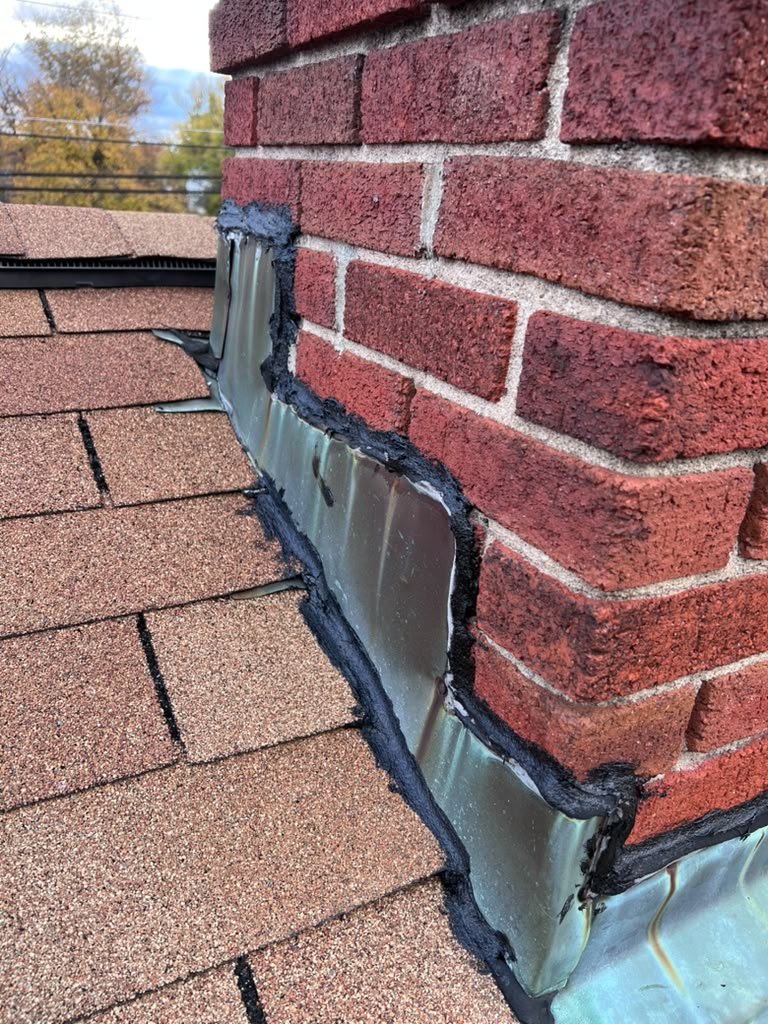
Chimney flashing is one of the most common sources of chimney leaks. It is the metal system installed where the chimney meets the roof, creating a seal that prevents rainwater from entering the gap between the chimney masonry and roofing materials.
Flashing typically consists of multiple pieces of metal that work together to direct water away from the chimney and roof intersection.
Over time, flashing can become damaged, loose, corroded, or improperly sealed. Previous repairs using roofing cement or sealant may also deteriorate, leaving openings where water can enter.
When flashing fails, rainwater can travel along the chimney or through the roof structure before becoming visible inside the home. This is why chimney leaks sometimes appear far away from the actual point where water enters.
Depending on the condition of the existing flashing, the repair may involve resealing specific areas, replacing damaged flashing sections, or installing a completely new flashing system.
2. Cracked or Damaged Chimney Crown
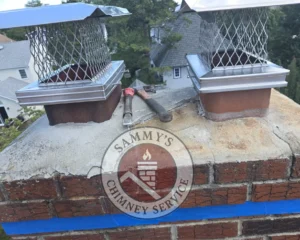
The chimney crown is the protective masonry surface located at the top of a chimney. Its purpose is to help direct water away from the chimney structure and protect the masonry surrounding the flue opening.
When a chimney crown develops cracks, water can penetrate the surface and enter the masonry below.
Chimney crowns are exposed to harsh outdoor conditions throughout the year. Rain, snow, temperature changes, and freezing water can gradually weaken the material, especially when the crown was poorly constructed or has not been properly maintained.
Small cracks may initially appear harmless, but repeated exposure to moisture can lead to further deterioration. In some cases, a chimney crown may become so damaged that repairing individual cracks is no longer sufficient, and a complete crown replacement may be necessary.
3. Deteriorating Bricks and Mortar Joints
Brick chimneys rely on strong masonry and properly maintained mortar joints to remain stable and resist water penetration.
Over time, mortar can become brittle, crack, crumble, or separate from the surrounding bricks. Bricks may also develop cracks, chipped surfaces, or spalling caused by moisture exposure.
When these areas are damaged, water can enter the chimney structure and gradually affect additional sections of masonry.
In Philadelphia, older brick chimneys are especially worth inspecting because many have been exposed to decades of weather and may have undergone previous repairs. Using incompatible mortar during earlier repairs can also contribute to future masonry problems.
Depending on the damage, the necessary repair may involve tuckpointing, repointing, replacing individual bricks, rebuilding sections of masonry, or applying an appropriate breathable waterproofing treatment.
4. Missing, Damaged, or Improperly Installed Chimney Cap
A chimney cap is installed at the top of the chimney to help keep rain, debris, and animals out of the flue while allowing proper ventilation.
When a chimney cap is missing, damaged, rusted, or improperly fitted, rainwater can enter directly through the chimney opening.
Water entering the flue may collect inside the chimney, contribute to deterioration, damage components, and create unpleasant odors. Debris and animal activity can also introduce additional problems.
Replacing a damaged chimney cap is often a relatively straightforward repair compared with extensive masonry work. However, the chimney should still be evaluated to determine whether water has already caused damage inside the structure.
5. Damaged Chimney Liner
The chimney liner protects the interior of the chimney and helps safely direct smoke and combustion gases out of the home.
Depending on the type of liner, its material, and the chimney system, deterioration or damage can affect the liner’s ability to protect surrounding masonry. Water entering through the chimney top or other openings may contribute to damage over time.
Older clay flue liners can develop cracks, while metal liners may experience corrosion or deterioration depending on their condition and exposure.
A damaged chimney liner is not always the original cause of a leak, but it can be part of a larger chimney problem that requires attention.
If a chimney inspection reveals liner damage, the appropriate solution may involve repairing or replacing the liner rather than simply sealing the visible exterior of the chimney.
6. Poor Chimney Design or Previous Repairs
Not every chimney leak is caused by natural wear and tear. Sometimes the problem comes from the way the chimney was originally constructed or repaired.
Examples include:
- Incorrectly installed flashing
- Poorly constructed chimney crowns
- Improper mortar application
- Inadequate water-shedding design
- Missing or improperly installed chimney caps
- Previous repairs that used unsuitable materials
- Incorrectly sealed connections between roofing and masonry
When the original design or repair work does not properly direct water away from the chimney, leaks may continue even after several attempts to seal the visible areas.
In these situations, correcting the underlying installation problem is often more effective than repeatedly applying temporary sealants.
What Are the Signs of a Chimney Leak?
Chimney leaks are not always easy to identify immediately. Sometimes the first signs appear inside the home, while other problems can be spotted by looking at the exterior masonry or roofline.
Here are some of the most common warning signs homeowners should watch for.
| Warning Sign | What It May Indicate |
|---|---|
| Water stains on ceilings near the chimney | Possible flashing failure or water entering through the roof |
| Damp fireplace walls | Water entering through masonry, crown, or flue areas |
| White stains on chimney bricks | Moisture carrying mineral deposits through masonry |
| Cracked or crumbling mortar | Deterioration allowing water to penetrate |
| Rust on fireplace components | Repeated moisture exposure |
| Musty odors near fireplace | Moisture accumulation or damp materials |
| Peeling paint or damaged drywall | Water entering surrounding interior surfaces |
| Loose or damaged flashing | Failure of the roof-to-chimney water barrier |
| Cracks in chimney crown | Potential water entry at the chimney top |
| Bricks flaking or breaking apart | Possible moisture-related masonry deterioration |
If you notice any of these signs, it is worth arranging a professional chimney inspection to determine whether water is entering the chimney and where the problem originates.
Why Is It Important to Fix a Chimney Leak Quickly?
Many homeowners make the mistake of waiting until a chimney leak becomes more noticeable before scheduling repairs. The problem is that water damage often continues behind the visible surface.
A small leak may not appear serious during the first few weeks. However, repeated moisture exposure can gradually weaken materials and create additional repair requirements.
Water Can Damage Chimney Masonry
Brick and mortar are designed to withstand outdoor conditions, but repeated water penetration can accelerate deterioration.
When moisture enters masonry and temperatures drop below freezing, water can freeze and expand within small openings. Repeated freeze-thaw cycles can contribute to cracking, mortar deterioration, and brick damage.
This is especially important during Philadelphia winters, when chimneys are exposed to changing temperatures and seasonal weather.
Chimney Leaks Can Lead to More Expensive Repairs
A small flashing problem may initially require only localized repair or replacement.
However, if water continues entering the chimney, it can damage mortar joints, bricks, crowns, interior surfaces, and other components. What started as a relatively simple leak repair may eventually require extensive masonry restoration.
Addressing the problem early can help reduce the likelihood of additional damage and unnecessary repair costs.
Moisture Can Damage Surrounding Areas of Your Home
Water entering through the chimney may not remain inside the chimney itself.
Depending on the location of the leak, moisture can affect:
- Roofing materials
- Attic insulation
- Ceiling drywall
- Interior walls
- Wood framing
- Flooring near the fireplace
Persistent moisture can also create conditions that support mold growth when affected materials remain damp.
Repairing the chimney leak and addressing any existing moisture damage are both important steps toward protecting your home.
Chimney Leaks Can Affect Fireplace Performance
A chimney is designed to provide proper ventilation for smoke and combustion gases.
Water intrusion, damaged masonry, deteriorated components, or problems with the liner may affect the condition and operation of the chimney system.
If you notice smoke entering the room, unusual fireplace odors, or changes in draft after discovering a leak, have the chimney evaluated before continuing to use the fireplace.
A chimney leak is not always directly responsible for draft problems, but the combination of water damage and venting concerns should not be ignored.
How Do Professionals Find the Source of a Chimney Leak?
Finding the exact source of a chimney leak is not always as simple as identifying where water appears inside the home.
Water can enter through one area of the chimney, travel along masonry or building materials, and appear somewhere else. This can make it difficult to determine the actual cause without examining the chimney and surrounding roof.
A professional chimney leak inspection generally involves evaluating several areas.
Exterior Chimney Inspection
The technician examines the exterior chimney for visible signs of damage, including cracked bricks, deteriorated mortar joints, damaged masonry, and other areas that may allow water to enter.
The condition of the chimney crown and cap is also evaluated.
Chimney Flashing Inspection
The flashing around the chimney is carefully examined for separation, damaged metal, corrosion, deteriorated sealant, or improper installation.
Because flashing is located where the chimney intersects the roof, this area is one of the most important places to evaluate when investigating water leaks.
Chimney Crown Inspection
The crown is checked for cracks, deteriorated material, improper slope, and other conditions that may allow water to enter the masonry.
If the crown is significantly damaged, the technician may recommend repair or replacement.
Interior Chimney Inspection
The inside of the chimney may also be examined for moisture, damaged flue components, deposits, deterioration, or other signs of water intrusion.
Depending on the situation, a more detailed chimney inspection or video scan may be necessary to evaluate the interior flue.
Identifying the Correct Repair
After examining the chimney, the professional should explain where the leak is likely coming from and what repairs are necessary.
This may involve repairing flashing, replacing a chimney crown, repairing mortar joints, installing a new chimney cap, waterproofing the masonry, or addressing multiple problems at the same time.
Proper diagnosis is important because repairing the wrong area can allow the leak to continue.
How Much Does Chimney Leak Repair Cost in Philadelphia, PA?
The cost of chimney leak repair in Philadelphia depends on the source of the leak, the extent of the damage, the chimney’s construction, and how difficult it is to access the affected area.
Some leaks can be resolved with minor sealing or localized repairs, while others require flashing replacement, crown reconstruction, masonry repairs, or a combination of services.
For budgeting purposes, homeowners can use the following estimated cost ranges.
| Chimney Leak Repair | Estimated Cost |
|---|---|
| Minor chimney leak sealing | $150–$500 |
| Chimney cap replacement | $200–$850 |
| Chimney crown repair | $200–$700 |
| Chimney crown replacement | $1,000–$3,000 |
| Chimney flashing repair | $300–$1,800 |
| Chimney flashing replacement | $400–$1,600 |
| Chimney masonry and mortar repair | $500–$2,500+ |
| Chimney waterproofing | $150–$820+ |
| Chimney liner repair or replacement | $1,500–$7,000 |
| Partial chimney rebuild | $1,000–$5,000+ |
These are general estimates for common chimney repair projects and are not fixed Philadelphia service prices. Actual costs may vary based on labor, materials, chimney size, roof accessibility, and the extent of damage.
A homeowner dealing with a simple flashing leak may pay considerably less than someone whose chimney has extensive masonry deterioration and requires several repairs.
Chimney Flashing Repair Cost
Chimney flashing repair generally costs around $300–$1,800, depending on the chimney size, material, roof access, and whether the existing flashing can be repaired or needs complete replacement.
If only a small section of flashing has become loose or damaged, a localized repair may be possible.
If the entire flashing system has deteriorated or was improperly installed, replacing it may be the more reliable solution.
Chimney Crown Repair Cost
Chimney crown repair generally costs around $200–$700, while a complete crown replacement can cost approximately $1,000–$3,000.
The price depends on the size of the crown, the amount of damage, materials, and whether the existing structure needs additional preparation.
Small cracks may be repairable, but severely deteriorated crowns often require more extensive work.
Chimney Waterproofing Cost
Professional chimney waterproofing typically costs around $150–$820 or more, depending on the size of the chimney, surface condition, preparation, and product used.
Waterproofing is generally intended to reduce water absorption through suitable masonry surfaces. It does not replace repairing damaged flashing, crowns, mortar joints, or other components that are allowing water to enter.
For waterproofing to be effective, the chimney should first be evaluated and any necessary structural repairs completed.
Chimney Masonry Repair Cost
Masonry repairs can range from a few hundred dollars for limited work to several thousand dollars for extensive brick and mortar restoration.
If water has caused bricks to crack, mortar to crumble, or sections of the chimney to deteriorate, the technician may need to remove and replace damaged materials.
The more extensive the damage, the more labor and material will be required.
Chimney Leak Repair Cost Comparison
The following table provides a simplified comparison of common leak problems, possible repair solutions, and the general price range homeowners may encounter.
| Leak Problem | Typical Repair | Estimated Price |
|---|---|---|
| Small flashing gap | Local resealing or repair | $200–$500 |
| Damaged flashing | Flashing repair or replacement | $300–$1,800 |
| Cracked chimney crown | Crown repair | $200–$700 |
| Severely deteriorated crown | Crown replacement | $1,000–$3,000 |
| Loose chimney cap | Cap replacement | $200–$850 |
| Cracked mortar joints | Repointing or tuckpointing | $500–$2,500 |
| Water-absorbing masonry | Breathable waterproofing | $150–$820+ |
| Damaged chimney liner | Liner repair or replacement | $1,500–$7,000 |
| Extensive chimney deterioration | Partial reconstruction | $1,000–$5,000+ |
The repair costs listed above may overlap when multiple chimney components are damaged. For example, a chimney leak caused by deteriorated flashing may also reveal damaged mortar joints or a cracked crown.
A professional estimate should clearly explain which repairs are necessary and what each repair is intended to accomplish.
Can You Repair a Chimney Leak Yourself?
Some homeowners may be tempted to fix chimney leaks using roofing cement, caulk, or store-bought sealants. While these products may be suitable for certain specific applications, they are not a universal solution to chimney leaks.
The challenge is identifying the actual source of the water.
Applying sealant to visible cracks without understanding how water is entering the chimney may only provide temporary relief. In some cases, inappropriate materials can interfere with proper masonry performance or make future repairs more difficult.
Chimney flashing, crowns, masonry joints, and liners all have different functions and repair requirements.
If the leak is coming from the roof-to-chimney connection, repairing the masonry alone will not solve the problem. If the crown is damaged, replacing the flashing may not stop water from entering through the top of the chimney.
For persistent leaks, professional evaluation is the best way to determine which repair is appropriate.
How Can You Prevent Chimney Leaks?
Preventing chimney leaks is generally easier and less expensive than dealing with extensive water damage after it develops.
Here are some practical maintenance steps that can help protect your chimney.
Schedule Regular Chimney Inspections
Annual chimney inspections help identify cracks, deteriorating mortar, damaged crowns, loose caps, and other problems that may lead to water intrusion.
Even if you rarely use your fireplace, the chimney remains exposed to outdoor weather and can deteriorate over time.
Keep Your Chimney Cap in Good Condition
A properly installed chimney cap helps prevent rain, debris, and animals from entering the flue.
If the cap becomes damaged, loose, or rusted, replacing it can help protect the chimney from further exposure.
Repair Cracks and Damaged Mortar
Small cracks and deteriorating mortar joints should be evaluated before water begins penetrating deeper into the chimney structure.
Timely masonry repairs can help prevent additional deterioration and preserve the chimney’s stability.
Maintain the Chimney Crown
The crown is one of the chimney’s most important defenses against water entering from above.
Regularly evaluating its condition and addressing cracks or deterioration can help prevent moisture-related damage.
Consider Professional Waterproofing
If your chimney masonry absorbs water, a suitable breathable waterproofing treatment may help reduce moisture penetration.
The chimney should be properly prepared, and damaged masonry should be repaired before waterproofing is applied.
Address Leaks as Soon as They Appear
If you notice water stains, dampness, unusual odors, or visible deterioration, arrange an inspection as soon as possible.
Waiting for the next season or until the damage becomes more noticeable may allow the problem to become more extensive.
Why Are Chimney Leaks Common in Philadelphia?
Philadelphia homes experience a variety of seasonal weather conditions that can contribute to chimney deterioration.
Rain and snow expose chimney masonry to moisture. Freezing temperatures can cause water trapped within small openings to expand, placing stress on bricks, mortar joints, and other materials.
Over time, repeated weather exposure can contribute to:
- Cracked chimney crowns
- Deteriorated mortar joints
- Damaged bricks
- Loose chimney flashing
- Corrosion of metal components
- Water penetration through masonry
- Interior leaks and moisture damage
Older homes may also have chimney structures that have been repaired multiple times, sometimes using materials that are no longer performing properly.
Because every chimney is different, the best way to protect your home is to maintain the chimney regularly and address problems when they first appear.
Frequently Asked Questions About Chimney Leaks
Is a leaking chimney dangerous?
A chimney leak can lead to masonry deterioration, damage to surrounding building materials, and moisture-related problems. If the leak affects the flue, liner, or other components of the chimney system, it may also create concerns about proper fireplace operation. The chimney should be evaluated to determine whether it is safe to use.
Can a chimney leak cause mold?
Yes. If water enters the home and affected materials remain damp, the conditions may support mold growth. Chimney leaks can affect drywall, wood framing, insulation, and other surrounding materials. Repairing the leak and properly drying affected areas are both important.
Does chimney waterproofing stop all leaks?
No. Waterproofing can help reduce water absorption through suitable masonry, but it cannot repair damaged flashing, a cracked crown, missing bricks, or structural problems. The source of the leak must be identified and repaired first.
How much does chimney flashing repair cost in Philadelphia?
Chimney flashing repair typically costs around $300–$1,800, depending on the size of the chimney, flashing material, roof access, and extent of the damage. Minor repairs may cost less, while complete replacement can cost more.
Can a chimney leak be repaired without replacing the chimney?
In many cases, yes. Most chimney leaks are caused by localized problems involving flashing, crowns, mortar joints, caps, or masonry. These issues can often be repaired without rebuilding the entire chimney. However, extensive structural damage may require partial reconstruction.
How do I know if my chimney leak is coming from the flashing or the crown?
Flashing problems typically occur where the chimney meets the roof, while crown problems involve the protective surface at the top of the chimney. However, water can travel through masonry and appear somewhere else, so visible water stains alone may not identify the source. A professional inspection is the best way to determine where the leak originates.
Should I repair a chimney leak before winter?
It is generally a good idea to address chimney leaks before winter. Cold temperatures and repeated freezing and thawing can contribute to further deterioration of moisture-damaged masonry. Repairing the problem before winter weather arrives can help protect the chimney and surrounding structure.
Professional Chimney Leak Repair in Philadelphia, PA
Chimney leaks should never be ignored. What begins as a small crack, damaged flashing, or deteriorating mortar joint can eventually lead to more extensive chimney damage and costly repairs.
The key to a lasting repair is identifying where the water is entering and addressing the underlying problem rather than simply covering up the visible signs of moisture.
Since 2017, Sammy’s Chimney Services has proudly served homeowners throughout Philadelphia, PA, and surrounding Pennsylvania and New Jersey communities, providing professional chimney repair, leak detection, masonry restoration, chimney crown repair, flashing replacement, waterproofing, chimney inspections, and complete chimney rebuilds.
Whether you are dealing with a leaking chimney, water stains around your fireplace, damaged mortar, a cracked crown, or deteriorating flashing, our team can help evaluate the problem and recommend the appropriate repair.
We focus on quality workmanship, honest recommendations, and dependable solutions designed to help protect your chimney and your home.
Need chimney leak repair in Philadelphia, PA? Contact Sammy’s Chimney Services today to schedule an inspection and get your chimney leak addressed before it leads to further damage.